Treatment overview
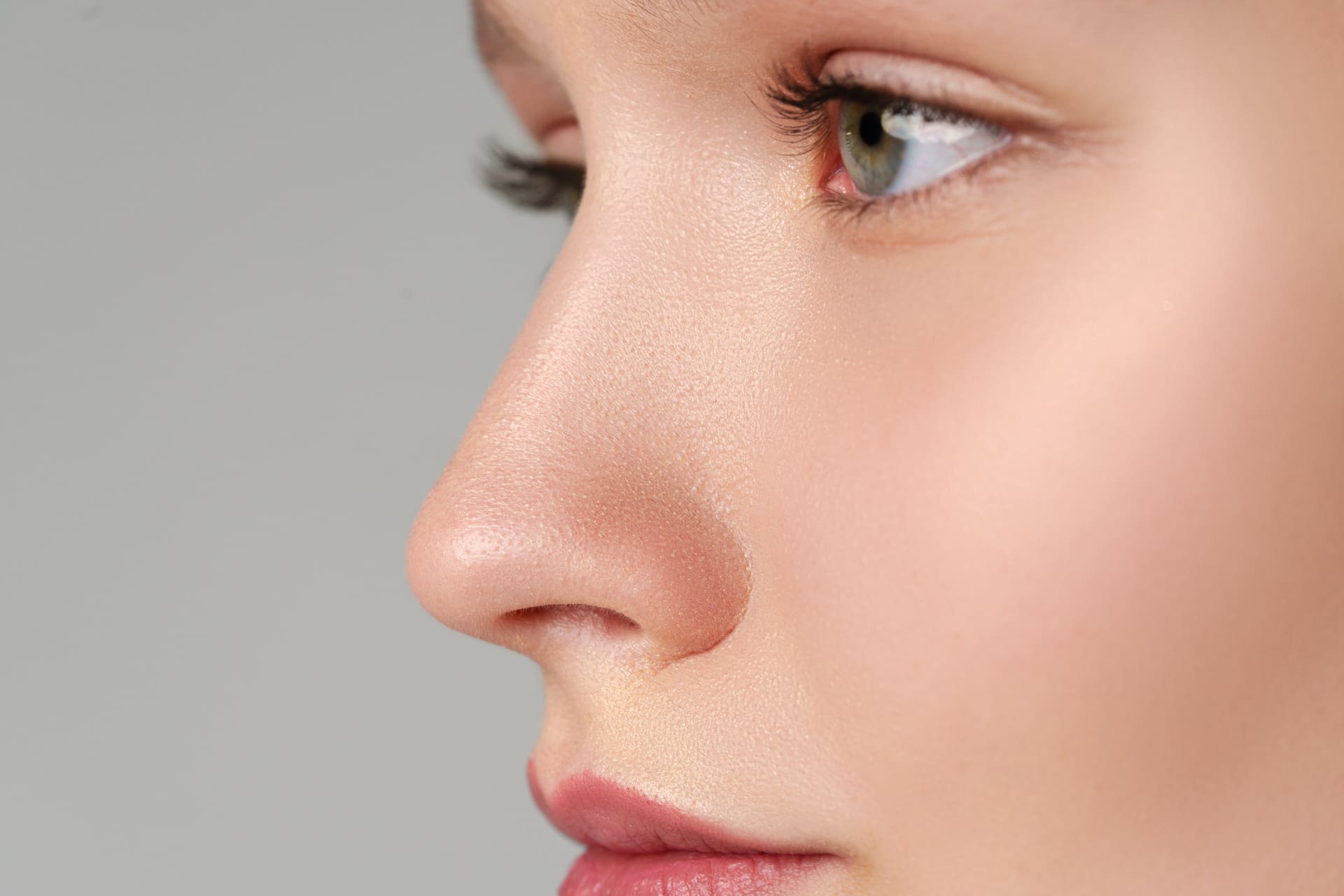
The nose is the central feature of the face — which is exactly why even small irregularities can affect the overall harmony and the impression of the profile. Bumps, mild asymmetry or a drooping nasal tip are often the reason a face looks less balanced, even when the rest of the proportions are harmonious.
Non-surgical nose correction is a precise, sophisticated approach that visually shapes and balances the nose — without surgery, without lengthy recovery and without permanent changes.
The treatment uses hyaluronic-acid dermal fillers placed at strategic points to:
- smooth out irregularities
- lift the nasal tip
- improve the profile line
- achieve better proportion with the rest of the face
What makes this treatment particularly interesting is that the nose isn’t “made smaller” — instead, by correctly distributing volume, the impression of a straighter, more harmonious line is created.
A properly performed non-surgical rhinoplasty is considered one of the most precise aesthetic procedures — where millimetres make a big difference to the overall impression of the face.
The nose is also a region that patients often only notice in photographs — particularly in profile or under certain lighting.
That can create a sense of self-consciousness in social situations, when being photographed or in professional interactions, where first impressions matter.
Many people want an improvement — but without surgery and without a radical change.
Non-surgical nose correction makes exactly that possible: a subtle improvement that restores facial harmony while you still look like you.
How the treatment is performed
The treatment is carried out by injecting filler into precisely defined points on the nose.
During the procedure:
- the profile and proportions of the nose are assessed
- irregularities and structure are evaluated
- a correction plan is defined
- filler is administered into the targeted zones
The procedure demands exceptional precision and experience.
Who the treatment is for
The treatment is ideal for people who:
- have mild irregularities on the nose
- want to improve their profile
- have a drooping nasal tip
- want to avoid surgery
- want a fast and reversible method
It’s important to note that this treatment is not a substitute for surgical rhinoplasty in every case.
Our approach
Nose correction calls for top-tier precision and experience.
At our clinic the treatment is performed by dermatology specialists with detailed knowledge of the anatomy and safety protocols of this region.
We don’t treat it routinely.
We first analyse the face as a whole — because the nose has to be in harmony with the rest of the face.
We plan every step — because millimetres make the difference between a good and an outstanding result.
We take time over the explanation — because we want you to come into the treatment with complete confidence.
Patients usually notice that the profile looks more harmonious and “cleaner” — without feeling that a big change has been made.
Preparing for the treatment
Before the treatment, we recommend:
- avoiding alcohol and certain medications (as advised by your doctor)
- arriving with clean skin
- letting your doctor know about any medication you’re taking
Recovery and precautions
Recovery is minimal.
After the treatment:
- mild redness or sensitivity may occur
- rarely, mild swelling
Recommendations:
- don’t put pressure on the nose
- avoid wearing glasses for a few days (where advised)
- follow your doctor’s aftercare instructions
When results become visible
Results are visible immediately after the treatment.
The final result settles over a few days.
Outcome:
- a straighter nasal line
- an improved profile
- a more harmonious facial appearance
Treatment combinations
For complete facial harmonisation:
- HIFU — for lifting and structure
- Morpheus8 — for skin quality
- CO2 Smaxel — for regeneration
- Candela Nordlys — for evening out skin tone
- Icoone Laser Med — for microcirculation
Additionally:
- fillers in the chin or cheeks to balance the profile
- Botox for the upper third of the face
All combinations are planned individually — for an optimal result.