
TREATMENT OVERVIEW
Hyperpigmentation is a common skin concern that occurs when certain areas become darker due to an overproduction of melanin, the pigment responsible for skin colour. Although it most frequently affects people in middle age and beyond, it can also appear in younger individuals. Whilst largely harmless, many people wish to reduce the visibility of these dark patches.
Causes of hyperpigmentation
Some individuals are naturally more prone to hyperpigmentation due to genetic factors, namely increased melanin activity within the skin. Hormonal changes can also play a significant role – for instance, the contraceptive pill may trigger changes in skin pigmentation in some women, although many use it without any such issues. Whilst there is no quick or straightforward way to eliminate hyperpigmentation entirely, it can be significantly reduced, and maintaining results after treatment is essential.
- Melasma
Melasma is a form of hyperpigmentation that presents as dark brown patches, most commonly on the face – across the cheeks, forehead, nose, and upper lip. This condition predominantly affects women, particularly those using hormonal preparations such as the contraceptive pill. Sunlight and UV exposure frequently aggravate melasma, which is why it often appears or intensifies during the summer months.
- Chloasma
Chloasma, also known as the “mask of pregnancy”, occurs in some pregnant women as a result of increased melanin production. Dark patches most commonly appear on the face, and occasionally on the abdomen. Sun exposure can worsen this form of hyperpigmentation.
- Sun spots
Sun spots are among the most common forms of hyperpigmentation and develop as a consequence of sun-induced skin damage. These small dark marks typically appear on the face, hands, or upper back, though they can form on any area of the body frequently exposed to the sun.
- Freckles (ephelides)
Freckles are a genetically determined feature and are often inherited. Whilst many people regard freckles as attractive, some wish to diminish or lighten them through various treatments.
- Post-inflammatory hyperpigmentation (PIH)
PIH is a form of hyperpigmentation that develops following skin injury, such as acne, scratches, or burns. It can also arise after aggressive skin treatments or the use of unsuitable products.
Laser removal of hyperpigmentation and pigmented lesions
Treatments for the removal of pigmented skin changes carry minimal risk and offer clients gentle, comfortable procedures with highly satisfying results. Poliklinika dr Jakić has two of the latest lasers for hyperpigmentation removal – Candela Nordlys and Lumecca. These laser treatments can address various areas of the skin, including the face, arms, hands, legs, back, and more.
WHO IS THE TREATMENT FOR?
Candidates for laser removal are individuals who:
- Have melasma on the cheeks, nose, forehead, and upper lip
- Struggle with the appearance of sun spots during the summer months
- Have any other form of dark patches on the skin
- Have age spots on the skin
Prior to every treatment, our consultant dermatologists will carry out a thorough assessment and, where appropriate, a facial skin analysis, on the basis of which they will recommend a personalised treatment plan.
PREPARING FOR THE TREATMENT
Before laser hyperpigmentation removal, it is important that the skin has not been exposed to the sun or sunbeds for at least one month, in order to minimise the risk of complications. For seven days prior to the treatment, the use of photosensitising creams, such as self-tanning products, should be avoided.
The skin should also be thoroughly cleansed to remove all make-up, creams, and oils using a cleansing milk and toner. It is essential that the area to be treated is not tanned, so that the laser can accurately identify the dark patches on the skin.
HOW IS THE TREATMENT PERFORMED?
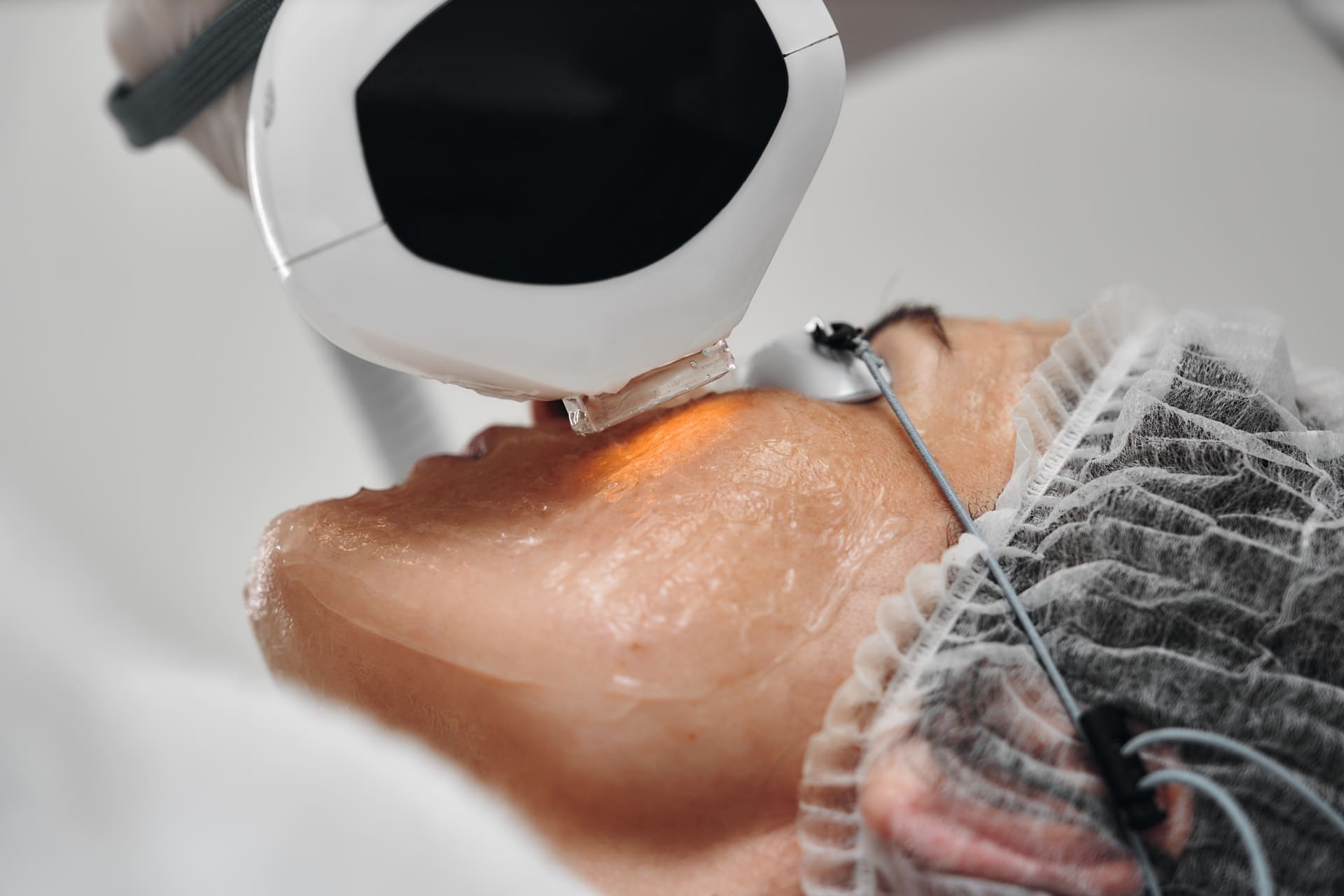
The laser treatment for hyperpigmentation removal is straightforward and carried out on an outpatient basis, without the need for local anaesthesia. Once the treatment area has been cleansed, the client puts on protective eyewear, a gel is applied to the clean skin, and the treatment can begin.
The laser handpiece is placed against the skin and a pulse of light is directed at the pigmented patch, which the client perceives as a mild tingling sensation. The light energy penetrates the skin, heats the melanin, and separates it from the dermis.
After the treatment, some redness is common, and small scabs may appear, which will resolve within a few days. If a further session is required, it can be repeated after four to six weeks.
RECOVERY AND PRECAUTIONS
Following the treatment, the treated area may be mildly red. To accelerate recovery and ease any discomfort, a cold compress may be applied. In most clients, the redness subsides overnight, and by the following day they are able to resume their usual skincare routine and wear make-up.
It is, however, essential to avoid sun exposure and sunbeds for at least one month after the treatment, until the skin has fully recovered. Beyond that period, the regular use of SPF 50+ sunscreen is recommended to prevent the recurrence of pigmentation.
PRECAUTIONS
Common side effects include redness and swelling, which do not typically persist beyond 24–48 hours.
Following the treatment, direct sun exposure must be avoided and SPF 50+ protective sunscreen should be used consistently.
Price
For detailed information on payment options and treatment prices, please refer to the current price list of Poliklinika dr. Jelena Jakić.