
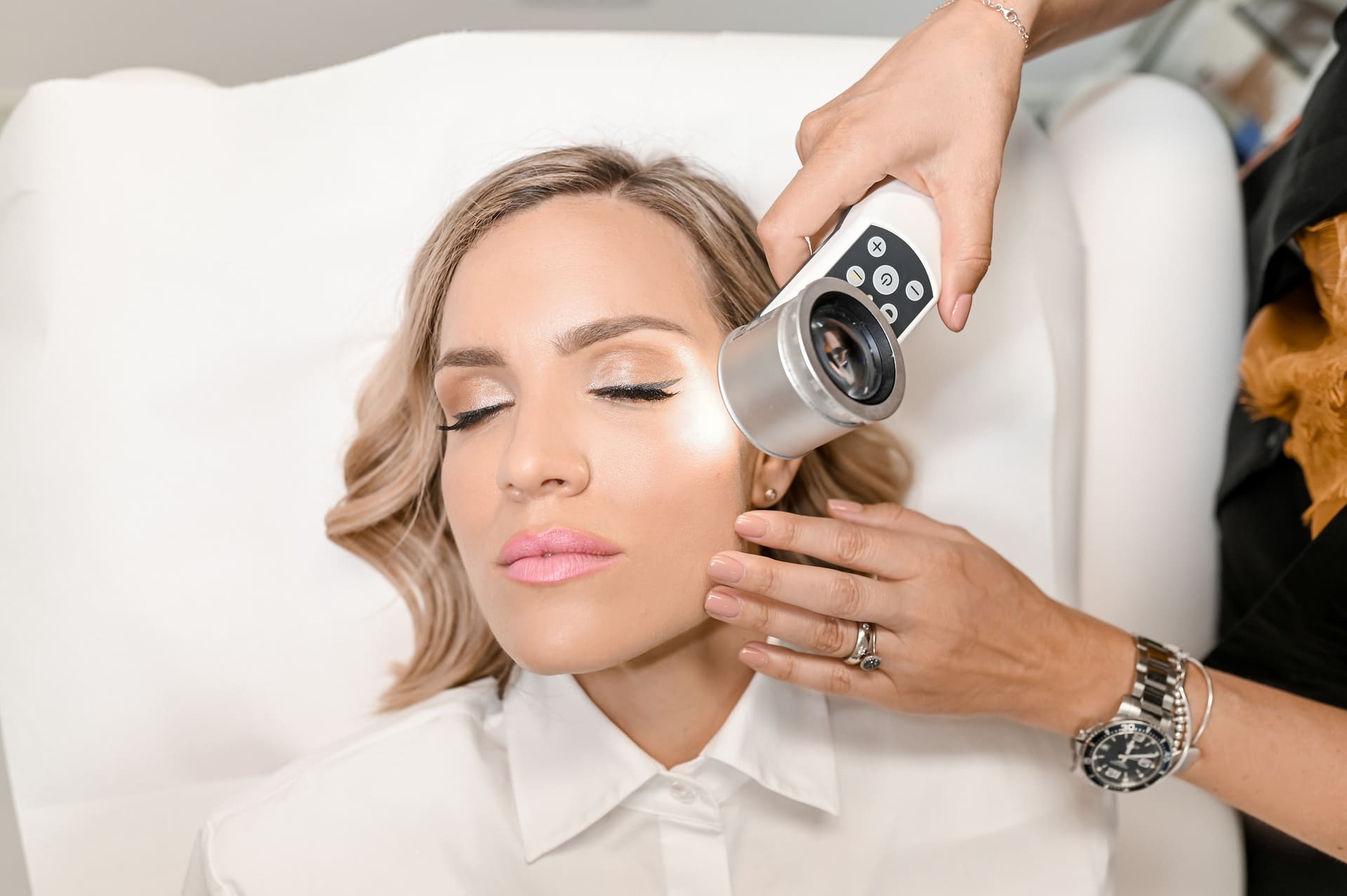
Examination overview
Moles are, in most cases, entirely harmless — but precisely because they are so common, it is important to know when they call for closer attention. A change in colour, shape or size is often subtle and difficult to detect without a specialist examination.
A dermatoscopic examination provides a detailed insight into the structure of moles and allows for the timely recognition of changes that are not visible to the naked eye.
It is a non-invasive and highly precise method that significantly improves the accuracy of skin lesion assessment.
Interestingly, dermoscopy enables visualisation of the deeper layers of the skin, allowing early detection of changes that would otherwise go unnoticed. This is precisely why it has become the standard in modern dermatology.
If you have a mole that concerns you — or simply wish to be reassured — an examination is the most straightforward way to obtain a clear answer.
How is the examination performed?
The examination is carried out using a dermatoscope — a device that magnifies and illuminates the structure of the mole.
During the examination:
- the shape, colour and structure of each mole are analysed
- any irregularities are evaluated
- changes are monitored over time where appropriate
The examination is entirely painless and swift, and a number of moles can be assessed during a single appointment.
Who is the examination for?
The examination is recommended for individuals who:
- have a large number of moles
- have noticed changes in their moles
- have fair skin or are frequently exposed to the sun
- have a family history of melanoma
- wish to monitor the condition of their skin as a preventive measure
If you are unsure whether a mole is “normal” — that alone is reason enough for an examination.
Our approach
Examining moles requires both experience and full concentration — because at times the smallest differences carry the greatest significance.
At our clinic, the examination is performed by a consultant dermatologist with extensive clinical experience, with ample time set aside for a thorough assessment.
We do not draw conclusions superficially. Every finding is explained clearly and calmly, so that you fully understand what it means — and what comes next.
For our patients, one thing matters most: peace of mind. And that comes from a combination of expertise, time and a considered approach.
After the very first examination, most patients feel a sense of relief — because, at last, they know exactly where they stand.
Preparing for the examination
No special preparation is required, however we recommend the following:
- do not apply creams or make-up to the area being examined
- remove nail varnish (if the nails are to be examined)
- bring along any relevant medical documentation
Recovery and precautions
There is no recovery period following the examination — it is a wholly non-invasive procedure.
Should any suspicious changes be identified, the doctor will recommend the appropriate next steps.
When the results are visible
The findings of the examination are available immediately.
Each patient receives:
- an assessment of every mole examined
- a recommendation for monitoring or removal
- a follow-up plan, if required
It is precisely this clarity that dispels the uncertainty which troubles patients most.
Complementary treatments
Depending on the findings, the further course of care may include:
- Candela Nordlys — for the treatment of pigmentation and vascular skin changes
- CO2 Smaxel — for the removal of certain benign lesions and skin regeneration
- Morpheus8 — for improving overall skin quality
- Icoone Laser Med — for regeneration and microcirculation
- HIFU — for additional skin tightening
In addition:
- surgical removal (where indicated)
- regular follow-up appointments
- a tailored skin protection plan
Every recommendation is based on genuine clinical need — never as a matter of routine.
An annual mole check (once a year) significantly improves the chances of detecting melanoma and other skin cancers at an early stage, which has a direct bearing on treatment outcomes.
Price
For detailed information on payment options and treatment prices, please refer to the current price list of Poliklinika dr. Jelena Jakić.